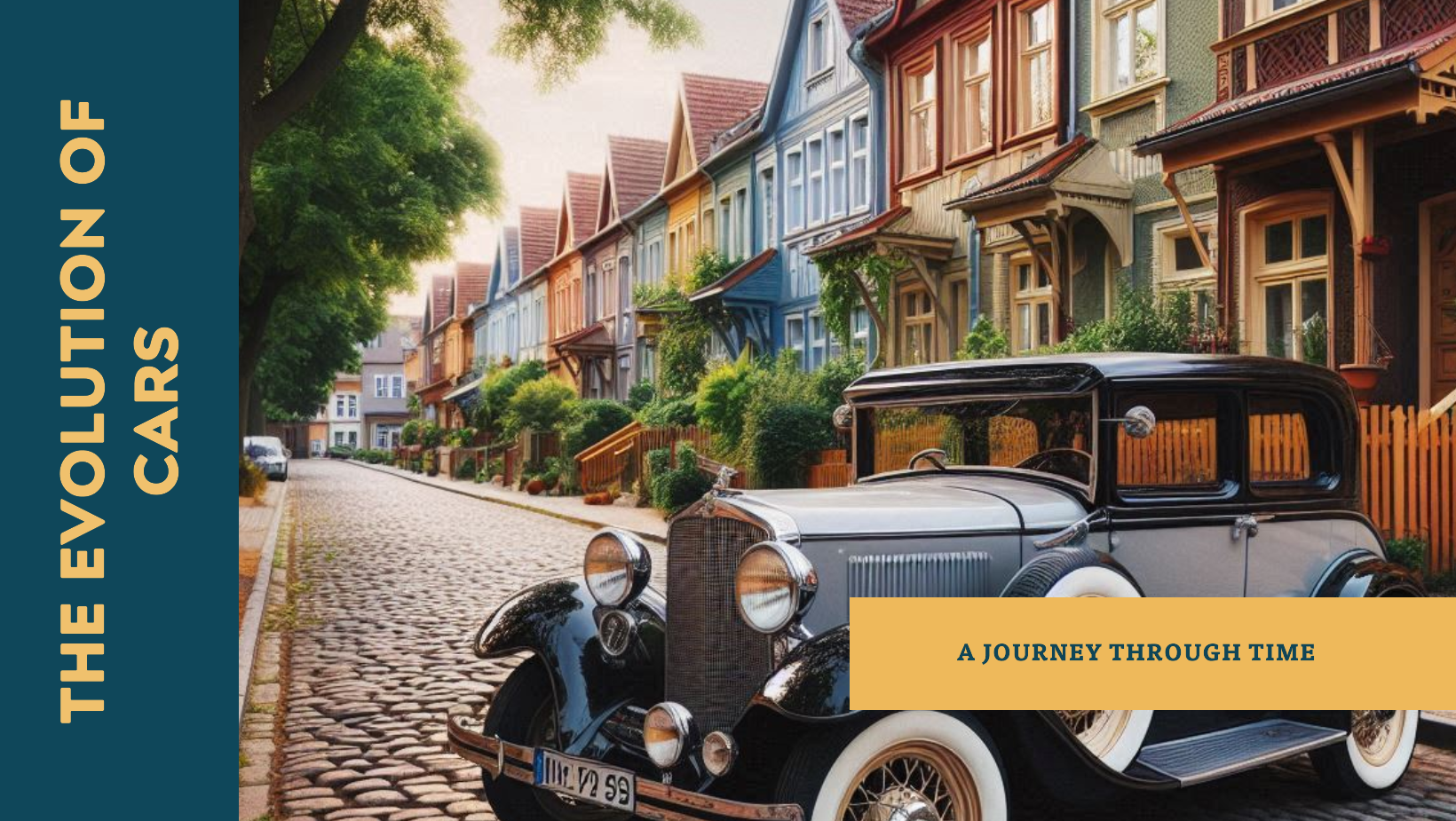
The automobile industry has undergone a significant transformation over the past fifty years. This period has seen substantial growth, pivotal advancements, and now, we stand on the cusp of predicting its future course. The industry’s evolution has been marked by electrification, autonomous driving, diverse mobility, and connectivity, shaping a new era of automotive technology. With global car sales expected to continue rising, albeit at a slower annual growth rate of around 2% by 2030, the industry faces macroeconomic challenges and the advent of new mobility services like car sharing and e-hailing. Despite these challenges, the commitment to electric vehicles (EVs) remains strong, with significant investments in research and development to improve battery performance and expand charging infrastructure.

Historical Context
The automobile industry has been a vital barometer of economic health and technological progress. Over the last 50 years, it has witnessed seismic shifts, shaping the way we move, live, and interact. Let’s rewind the clock and revisit some pivotal moments:
Key Changes and Advancements
Safety Innovations:
- Seat Belts (1950s): Engineer Nils Bohlin introduced the three-point seat belt, saving countless lives.
- Crumple Zones (1950s): Mercedes-Benz pioneered crumple zones, absorbing collision energy and minimizing passenger impact.
Technological Leaps:
- Anti-Lock Braking Systems (ABS): Developed in 1929 for aircraft, ABS prevents wheel lockup during braking.
- Power Steering (1970s): Standardized for many vehicles, enhancing driving comfort.
- Engine Computers (ECU): Revolutionized engine management and fuel efficiency.
- Hybrid Engines: Combining internal combustion engines with electric power.
- Automated Driving: From ADAS (Advanced Driver Assistance Systems) to robo-taxis, autonomy is reshaping mobility.
Electric Revolution:
- EVs (Electric Vehicles): Sustainability concerns drive interest. In Europe, over 65% of new cars sold are expected to be fully electric by 2030.
- China’s EV Dominance: One in four cars sold in China is an EV, with global ambitions for Chinese manufacturers.
Connectivity and Autonomy:
- Robo-Taxis and Robo-Shuttles: Autonomous shared mobility vehicles scaling up.
- Auto Insurance Landscape: Adapting to shared mobility and self-driving cars.
- Lithium-Ion Batteries: Needed to power growing EV demand.

Future Predictions
Electrification
- By 2030, EVs will dominate markets globally. Consumers increasingly favor electric vehicles for sustainability reasons.
- Battery technology will evolve, enabling longer ranges and faster charging.
Autonomous Driving
- Despite setbacks, autonomous technology will continue to advance.
- Robo-taxis and self-driving shuttles will become commonplace.
New Business Models
- Incumbents must prioritize new business ventures to compete with agile startups.
- Experience, cash reserves, and existing customer bases give incumbents an edge.
Conclusion
The evolution of the automobile industry from the introduction of seat belts to the advent of autonomous vehicles is truly astounding. As we accelerate towards a future that is electrified, interconnected, and self-directed, we are faced with a path that holds both potential obstacles and exciting prospects.
Leave a Reply